Start with the man you know
Begin with the Men list. Search by surname first, then try a service number or a recorded place. Initials, spelling variants and earlier regiments can help distinguish men with similar names. Keep each source’s spelling until the identities can be securely connected.
Write down the name, number, corps or unit and death date before following the source links on his biography. A number alone may identify men in different services. A missing search result is a reason to investigate further.
Follow the evidence
| Record | What it can establish | What still needs checking |
|---|---|---|
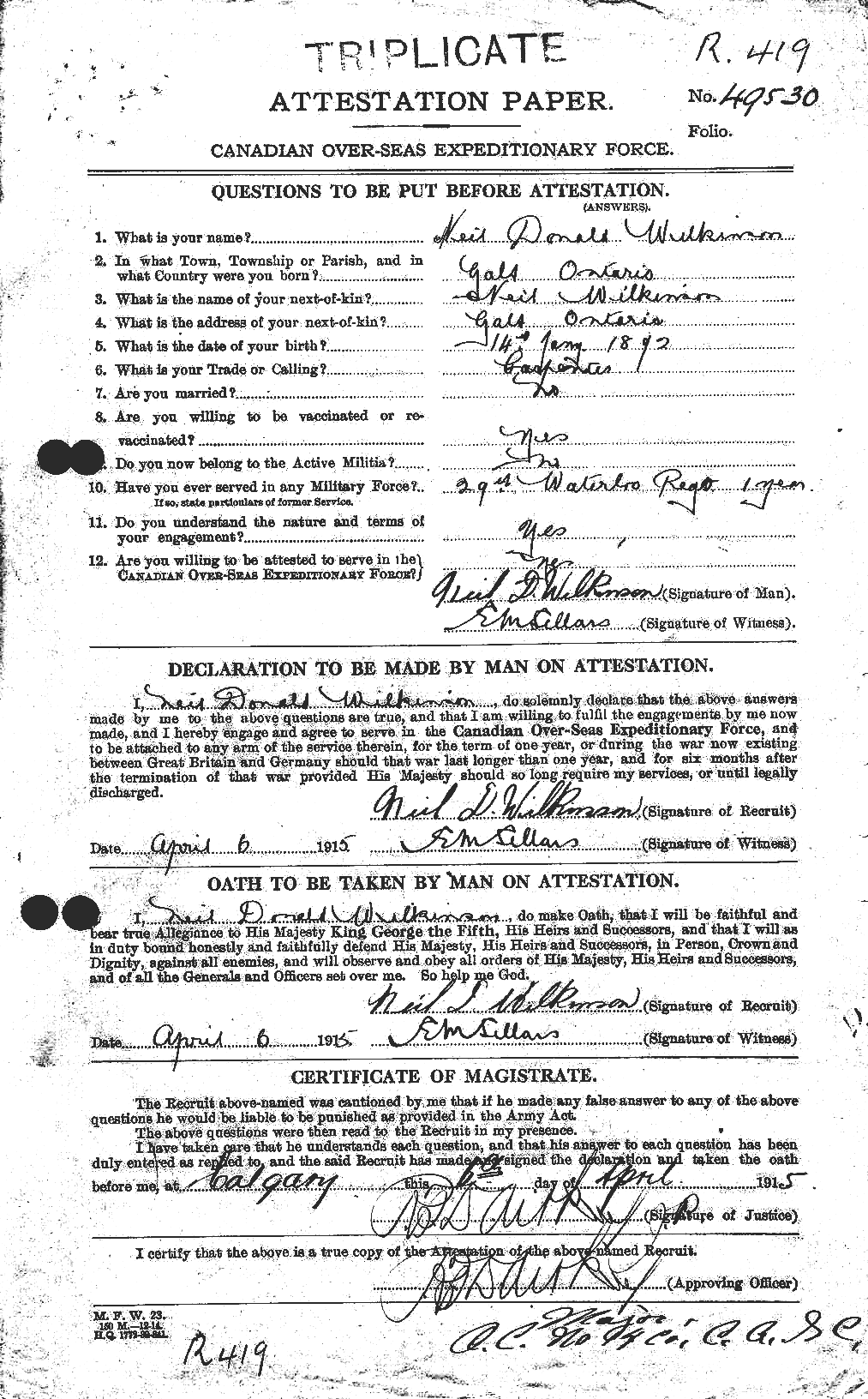
| Attestation | Declared occupation, age, address, next of kin and earlier service | Declared ages may differ from civil records. Next of kin does not automatically establish a particular relationship. |
| Service or casualty form | Dated transfers, embarkations, attachments and hospital admissions | Departure and arrival are separate events. An attachment is not always a permanent transfer. |
| Medical report or board | A contemporary diagnosis, disability assessment and opinion about service attribution | An illness during service is not necessarily the cause of a later death. |
| War diary | A unit’s location, activities and recorded incidents | Unit activity does not establish that a particular man was present or performed a task. |
| Burial or commemoration record | Recorded cemetery, grave or missing-person memorial | An original grave may have been moved. A family headstone may commemorate a man buried elsewhere. |
| Census, newspaper or family material | Civilian work, households, family responses and local remembrance | Dates, identities and the origin of an image need their own checks. |

A worked example: Ernest Reinmuth
Reinmuth’s story began with a Tasmanian commercial traveller, a wife and four children. His military records then connect him with the remount service, a mobile veterinary section and the Australian Veterinary Hospital at Calais.
- Identify the file. NAA B2455, REINMUTH ERNEST WILLIAM HENRY, item 8027922 identifies service number 1131. The biography cites selected pages from this 57-page file; its source notes identify those examined.
- Separate the dates. His joining date and the following day’s oath record different stages of enlistment. The service statement likewise separates the date of transfer from the date he joined the new unit.
- Read the accident findings. Army Form W.3428 records the horse kick during inspection on 31 August 1918. Its completed findings establish an accident on duty, with no blame attributed.
- Compare the later explanation. The letter to his widow dated 24 June 1919 confirms hospital admission on 3 September and death on 7 September from the resulting injuries. It helps explain why an earlier disease entry was corrected.
- Keep the remaining limits visible. These papers do not independently establish the exact birth date. The contemporary burial reference has not been verified as the current cemetery reference.
Read Reinmuth’s biography and source notes. The example shows how several documents answer different questions about one life.
Starting points for each national collection
- Britain: use the Commonwealth War Graves Commission (CWGC) record and the specific service, medal, census or diary sources identified on the biography. The National Archives provides the national archive starting point.
- Australia: begin with the National Archives of Australia, Australian War Memorial and the profile’s named newspaper sources.
- Canada: the linked Library and Archives Canada attestation or personnel file supplies personal and service evidence. Compare it with the Veterans Affairs Canada commemorative record.
- New Zealand: follow each profile’s Cenotaph, war-grave, reinforcement-roll and Papers Past references. A corps entry or burial in Egypt does not establish a posting to a particular numbered section. Some of those postings remain unknown in this collection.
- South Africa: start with the profile’s original service or casualty card where available, then the CWGC record and identified family sources. The collection includes men whose labour, remount or later service identities differ from the veterinary corps; keep those distinctions. The South Africa War Graves Project is a route to records and images, rather than proof of every biographical claim.
Why can’t I find my relative?
The memorial remembers men connected with the veterinary services who died during the First World War or subsequently as a result of their service. It does not include everyone who served, and it is not yet a complete casualty roll for any country or corps.
Try another spelling or fewer filters. To search within biographies, open More search options and select Search all record text, including biographies. A veterinary connection may appear under an earlier or later service identity. Some men have not yet received a biography; others may fall outside the current scope.
If you have evidence for a missing man, send his name, service number, recorded unit, death details and source. Short surviving records are still worth submitting.
Save and share the evidence
Record the archive, series or item number, page, date and the claim it supports. Keep the full image as well as any transcription. Label uncertain readings. On a biography, Cite this biography provides a copyable reference; Print this record makes a paper copy with its sources.
Sources and method explains the collection’s wider rules. Contribute information lets you send corrections, documents or a family remembrance for review.